Storyteller. Raised in Balmain.
Matt Inglis
Novels from the streets, pubs and waterfront of Balmain.

“Bittersweet fumes from the Colgate factory, diesel engines and industrial grime. It was fresh air to us.”
On the shelf
Covers shown are temporary.
First on the list reads first.
Leave your email and Chapter 7 of Waterfront Rose is yours straight away. The first hundred people also get an early reader copy of the whole book when it’s finished.
Form not showing? Sign up here.
A Balmain novel
Waterfront Rose
Matt Inglis
Rose Nava buried her mother in February, the only family she had. In October she stood at the back of a crime boss’s funeral, a stranger to everyone in the church. He was her father. He’d left her over forty million dollars’ worth of property. And the rest of his family was sitting in the front row, with no idea she existed. Until now.
The book
Rose Nava grew up on one fact about her father. He drowned before she was born.
Then her mother dies and leaves her a card, half a phone number, a sapphire ring and a video tape, and the fact falls apart. He was alive the whole time, across the harbour in Balmain, and his name was Ray Darcy.
Ray Darcy imported fridges. For decades the cocaine came in inside them, and now and then a man went to the bottom of the harbour chained to an empty one. By the time Rose finds him, somebody has shot him on a Balmain wharf.
He has left a widow, three children and a business that was never on paper.
It’s the first family Rose has ever had. And somebody close to Ray Darcy had him killed.
- WherePotts Point, Balmain and Birchgrove, and the Northern Rivers
- When2026
- WhatLiterary crime. Family first, crime second.
- StatusNovel in progress
Watch it or read it
Read: the Prologue
Prologue
The two shots made almost no sound. A cough, twice, close together. The first took him in the side of his neck and dropped him on the boards. The second he didn’t hear at all, after a lifetime of hearing everything.
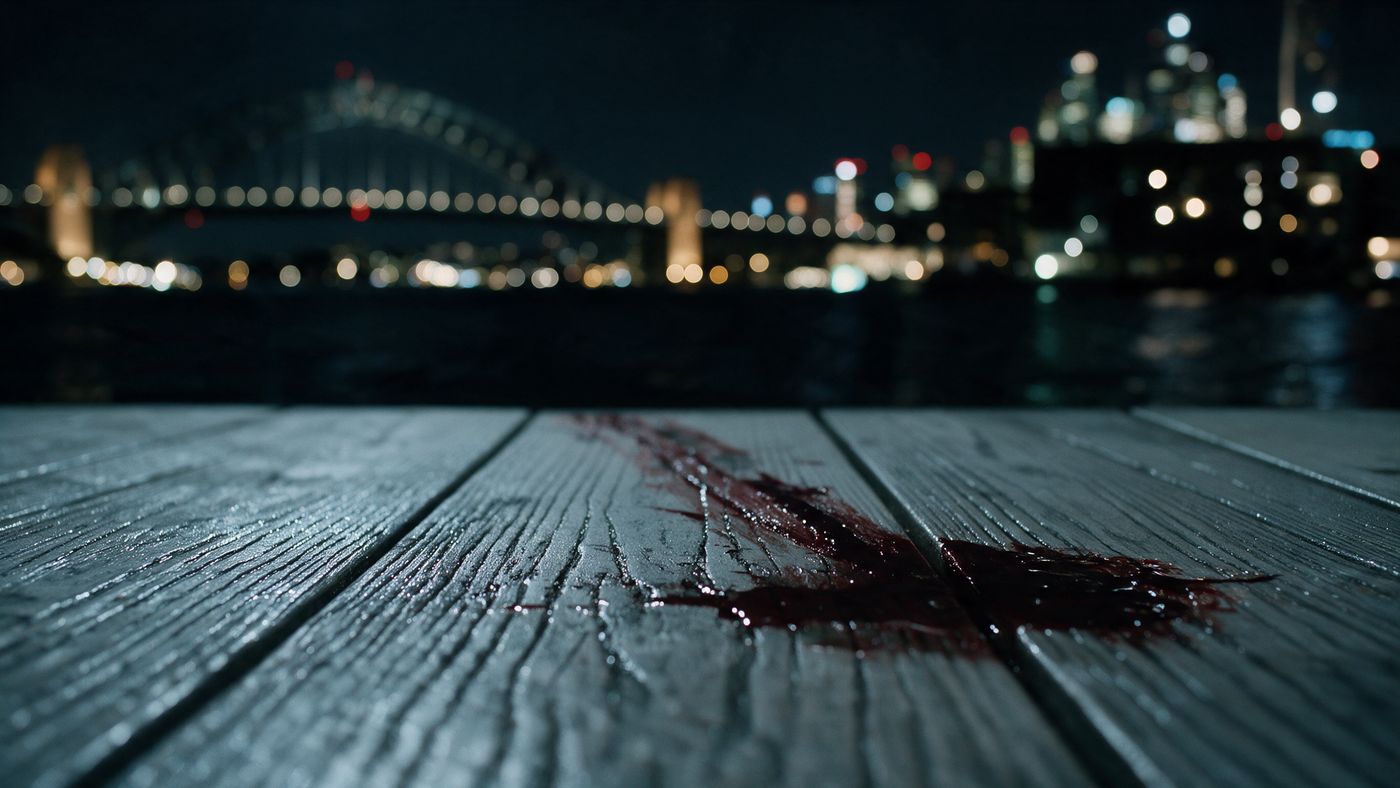
He was crumpled over on the deck of Yeend Street wharf, his green eyes flickering shut on the surface a hand’s width from his face. Grey composite. Moulded to look like timber, textured so nobody slips, bolted down on piles over the water, with the wash of something going past out in the dark slapping in underneath and gurgling back out. The old wharf had been creosoted hardwood, splintering, black with sixty years of working men. He’d got splinters off it at nine. Caught fish off it, swum off it, bled on it at fourteen in a knuckle fight he won, and bled other men on it later, when that was the work. All of it pulled out and barged away and replaced with this, and now here he was going out on a surface that couldn’t even give him a splinter.
He came down here most nights. That was the thing they’d have known — that he’d be on this wharf at this hour, alone, the way he had been for years. It started as convenience. Deep water off the end of it, no houses looking down, and a road above quiet enough at two in the morning to back a car down. Four men had gone off this wharf. He could have named the month for every one of them, and the reason, and there was only one he’d have done again. And then somewhere in the last few years he’d started coming down with nothing in the boot and no reason to be here, standing at the rail over the water he’d been feeding for forty years, thinking about them. Not praying. He wouldn’t have gone that far.
Behind and above him, up the steep steps, the ridge and the house on Ballast Point Road. Where the Caltex tanks had been cut into the cliff there was grass now, and lighting, and a sign explaining what used to be there.
And out in front, down the length of Mort Bay and across the black water, the city, and the bridge lit up over the harbour. Still standing.
He brought the phone down with him most nights. Joe knew. Nobody else did.
Tonight it had rung.
He’d got it out of his coat at the rail and answered it.
‘Hello?’
Nothing came back. He stood there with it against his ear, and nobody said anything, and then it ended, and he put it back inside his coat.
Then there were feet on the steps.
Keep reading
Somewhere above him a voice he didn’t know was talking. Not to him. Young — no Balmain in it at all — saying something short to somebody further off and getting a word back, the two of them unhurried, neither of them using his name. They hadn’t been told who he was. Just a job and an address and a car to look for.
An acid taste rushed up into his mouth, copper and chemical, and for a moment it wasn’t blood — it was the air off the factories when he was a boy, the whole harbour’s breath of it, diesel and soap and industrial grime. To the people who lived there it was just air. There was no other kind. Most of them were long gone now, either left Balmain or left us entirely. Or down below.
Two sets of feet going away fast on the boards. Two pairs of white runners went past his face, the bubble in the heel. Then up the steps, both of them, and up on the road a bike started — one of the Japanese ones, wound up high and let off — and it was gone before the sound of it got down to the water.
No chain. No weights. Nobody standing over him to make sure. They were kids and they were already three streets away and they’d left him lying on a wharf like something spilled.
He got his elbow under himself.
It was about a metre and a half of deck to the edge and it took him a long time, on one arm, with his legs not doing anything he asked of them, and the new boards took the skin off the side of his face on the way.
He got his head and his shoulders out over the water.
Four men had gone in off here. He’d stood at this rail on a hundred nights with nothing in the boot, looking down at where they were.
He wasn’t going to be found lying up here.
He put his weight forward and went in.
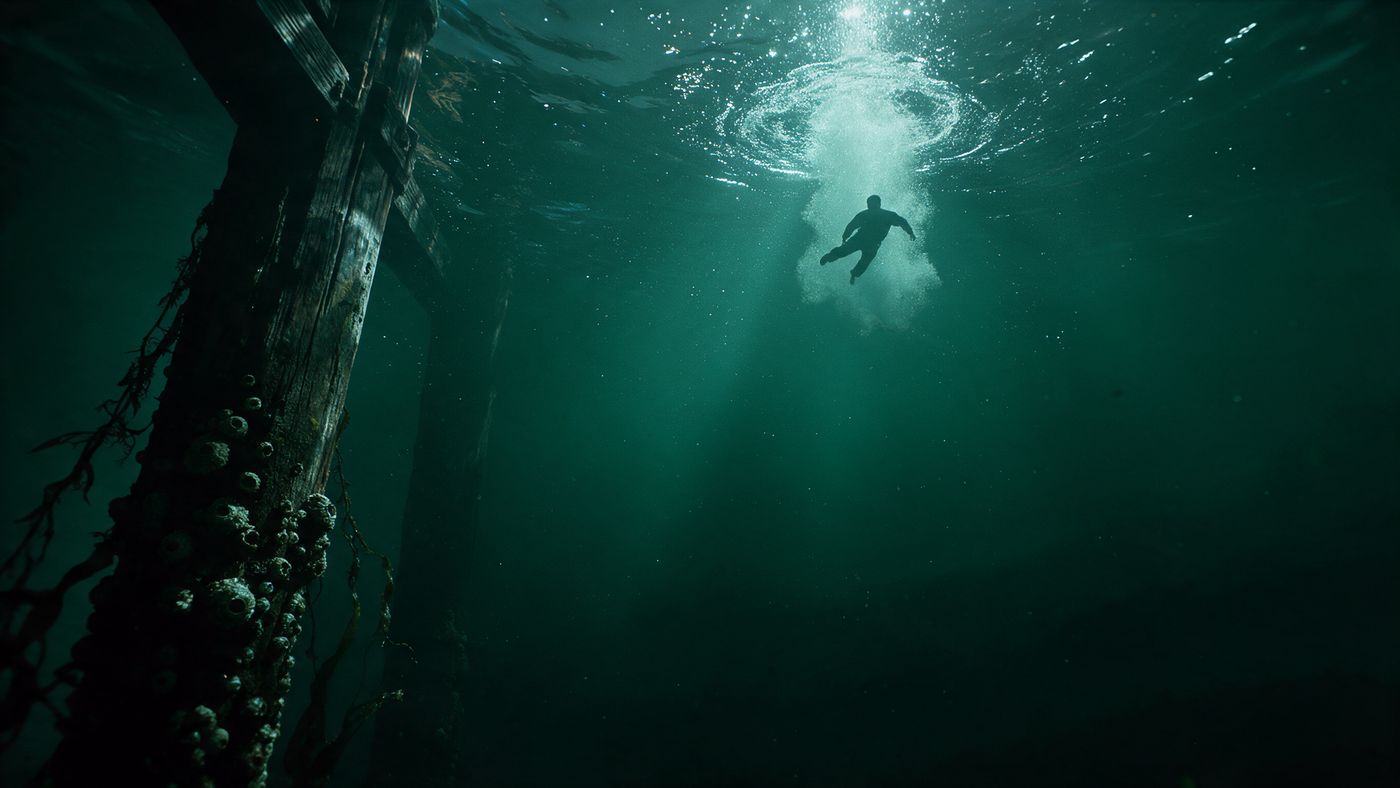
The cold came up and over and took him properly, the way it takes anything. What sank was the body. What ran on, for a few seconds more, was the brain — firing backwards through a life as the harbour closed over it, the last of the current going out through everything it had ever held.
Down past the pylons, furred with barnacle and weed, the dark green thickening. A fish turned away into the murk. Each metre was a year, a decade.
The Town Hall clock chiming. A boy on a bike on Darling Street. Holding hands at Birchy oval.
Deeper. Jumping the ferry wash off Darling Street wharf, whole summers of it, tumbling under in the white water with the fear and the excitement of it every time — pulled into the blades, or held under till the ferry moved off, waiting it out on a lungful. Coming up laughing. The old concrete aqueduct running off White Bay Power Station, him and his mates flying down it into water the turbines kept warm. They called it the Swifty.
Sinking down again. His initials, R.D., in the sandstone wall near Birchy oval, scraped in week after week on the way to footy, him and boys whose names were down in the silt now too. The shudder of the container ships through the floorboards of the family house at Ballast Point Road at night, the harbour working below while the suburb slept.
Deeper still, where the light barely reached. His mother’s face the day the paddy wagon took her up to Callo — the asylum on the hill where half the suburb had someone — her face at the little barred window, the dark hair, the unusual smile that told him he’d be alright. Gone somewhere none of them could follow. And his father after that, home from the war broken and now broken again, doing his best with the boy and the bottle and the empty side of the bed. The fireplace no longer burning, no longer warm, the cold of that house after his mother left. The cold of this water. The same cold, or near enough.
And then the faces. Down here where he’d sent them, one after another across the years — coming up out of the dark the way faces do, unhurried, patient, as if they’d been waiting on him to arrive. He had known this appointment was in the book. Every man in his line of work knew it. He wasn’t afraid of them.
And one of them out in front of the others. A mate, once. A man who’d wanted the same woman and had made up his mind to do something about her, and Ray had heard what he was arranging and had not slept on it. He’d have done it again tonight. He’d have done it every night for thirty-five years.
He’d gone and got the man’s boy out of that house four days later and raised him as his own and never told him a word of it, and had been paying for it in instalments ever since, and every instalment had come out of the same place.
He was sorry about a lot of things. Not about that. Never once about that.
And at the bottom of it all, past even the dead, where it was darkest and stillest, calm, warm — just her. Laughing at something he had said, her head going back, the light on her tanned skin, the single freckle, the brown eyes.
Lucia.
And her voice, from further back than everything, saying the name the way only she said it — Rosa — the Iloilo in it, the Spanish underneath, the Australian still new on her.
And now his own voice answering, calm, proud, gravelly. The only time he’d ever said it out loud.
Rosey girl.
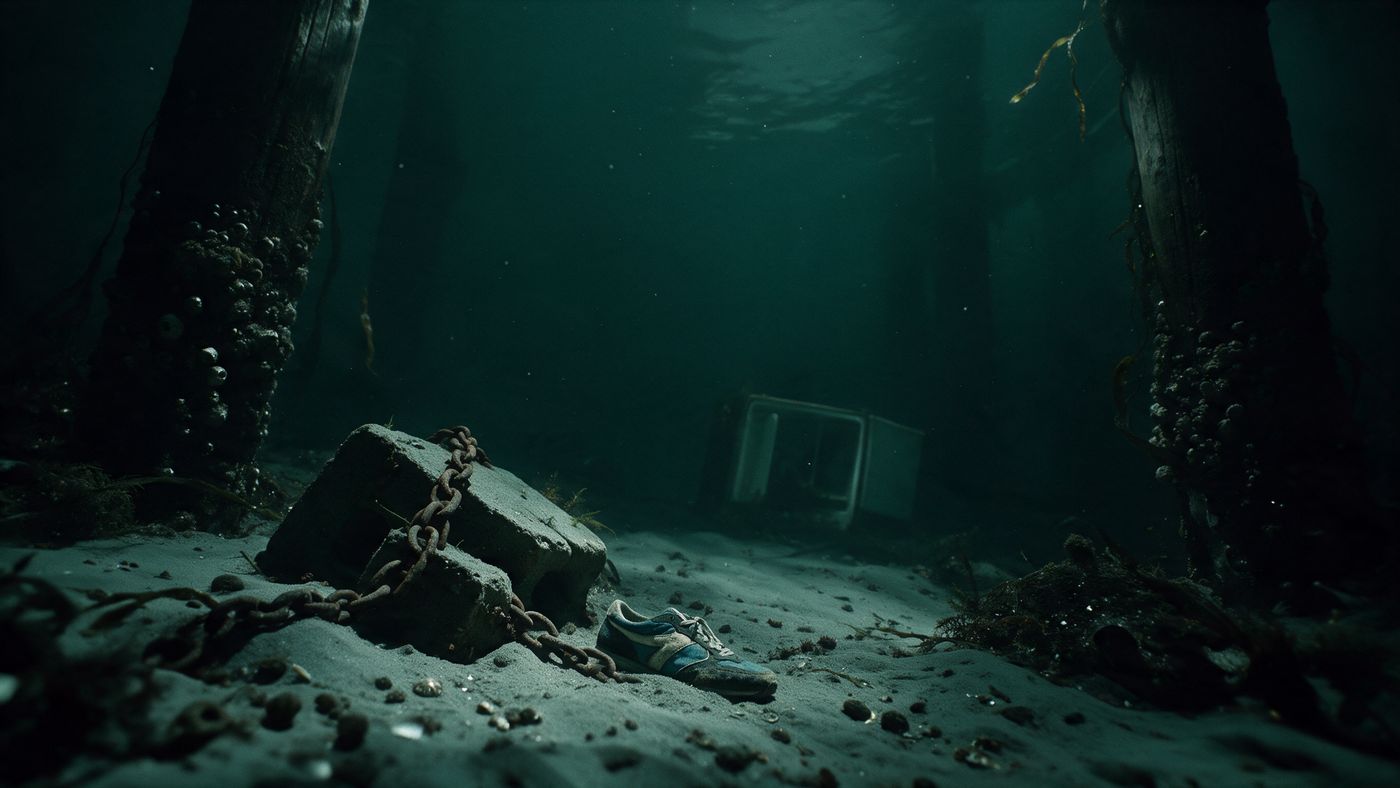
The phone went in with him. It came out of his coat on the way down and went to the bottom on its own, and lay there in the silt with a light in it.
The light flickered.
Then it went out.
Next: Chapter 7, for the list
Chapter 7 goes to everyone on the mailing list. Leave your email and it’s yours.
Form not showing? Sign up here.
A Balmain novel · Coming after Waterfront Rose
Tiger’s
Tale
Matt Inglis
Words outlive us. So does first love.
A deaf paperboy, a vanished father and a corrupt cop. In the last years of working-class Balmain, one boy writes down everything the suburb wants forgotten.
The book
Balmain, 1979. Nine-year-old Thomas “Tiger” O’Keefe drags a yellow barrow of afternoon papers past twenty-six pubs. He can’t hear the suburb’s whispers, but he misses nothing.
His father has vanished, his mother is slipping away, and the one person he lets in is Sarah Day. When a detective with a charming smile starts courting Sarah’s mother, Tiger keeps writing it all down, in letters to a father who isn’t coming home.
And under all of it, a love story: two kids who protect each other from nine years old to nineteen, and never let go.
- WhereBalmain, Sydney
- When1979 to 1989
- The suburbWorking docks, the Colgate factory, ferries at Darling Street Wharf, Dunlop KT26s on every kid
- StatusIn development
Read: an excerpt
Balmain, 1979
The crooked rubber wheel squeaked and groaned as it bobbled over the cracked tar footpath. The tar had been layered for decades with the sweat and blood of waterfront workers, and the swill and froth of spilled beer.
The golden-haired boy dragged the reconditioned yellow barrow full of afternoon newspapers, blowing a silver pea whistle. He blew it hard as he passed Mrs O’Rourke. She counted on her afternoon paper, and Tiger counted on the tip she’d give him.
If Tiger shut his eyes, he would know exactly where he was. The smell of soap left a chemical residue in his nostrils, and now and then the road shuddered beneath his feet. The Colgate factory was a reminder to the uninitiated that workers lived here.
As Tiger reached the peak of his afternoon run, he knew the tips would be flowing. It was payday. It was hot enough to melt the electrical tape on his barrow handle, the page 3 girl in the Telegraph looked great, and the Tigers had won on the weekend. He readied himself for the Exchange Hotel, one of twenty-six pubs and a place of comfort for underworld figures, ex-cons, bikers, jockeys and regular hard-working drinkers. Tiger imagined his old man would be inside, mixing it up like one of the Star Wars characters he’d seen on the silver screen the week before.
There are those raised in Balmain, and those who wish they were.

About
Matt Inglis
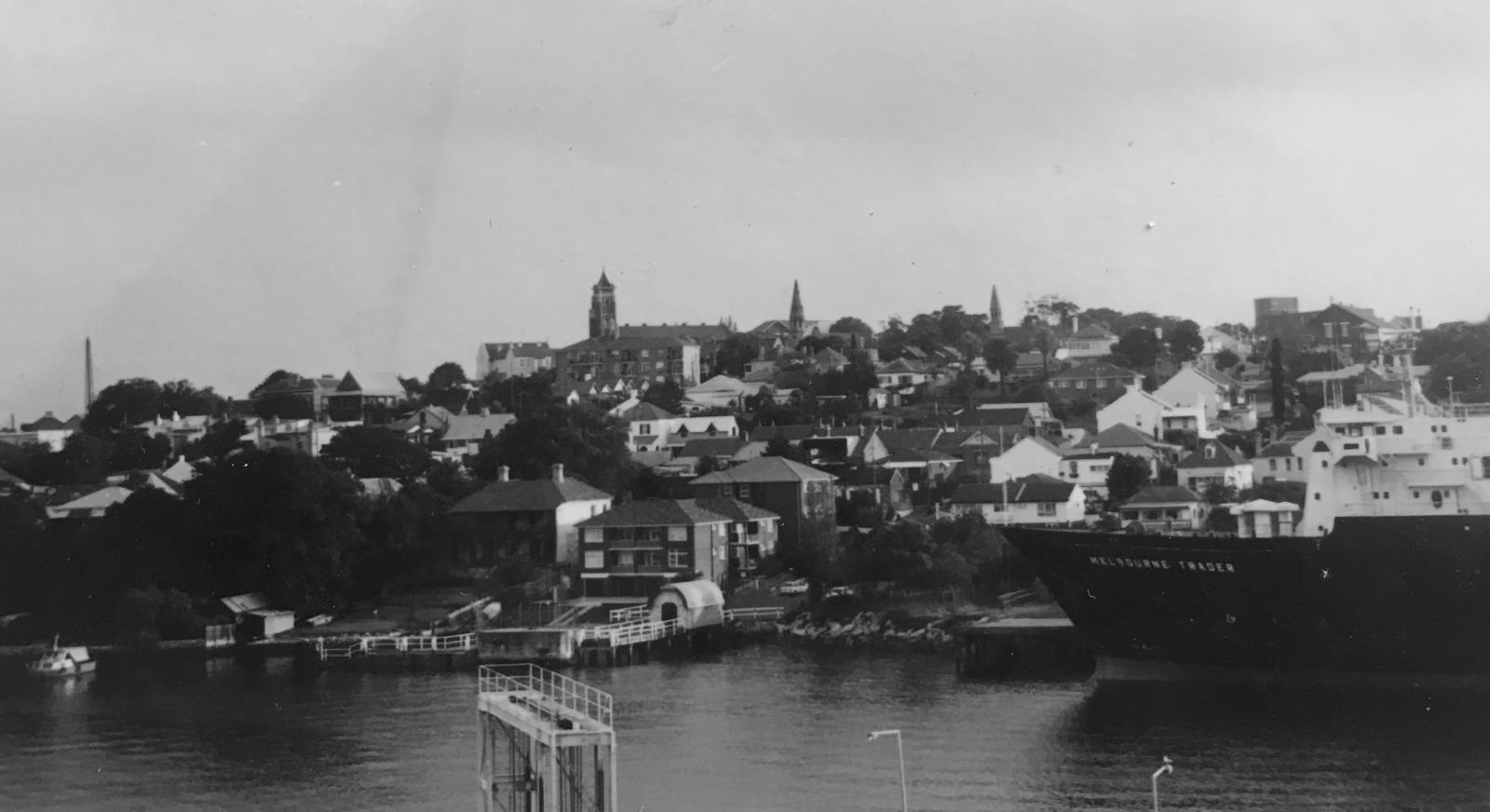
Matt Inglis was born in London to an Australian mother and an Irish father, and raised in Balmain from the age of four. That was the 1970s and 80s, when Balmain was still a working suburb of docks, factories and pubs, and container ships came up the harbour past the end of the street.
School was Birchgrove Primary, then Balmain High. Summers were Dawn Fraser Baths and harbour swims in Mort Bay. Winters were footy in the mud at Birchy Oval and soccer for Balmain Police Boys, which took some nerve in a suburb that reckoned soccer was soft. Weekends were the Tigers at Leichhardt Oval and, in his teens, infamous house parties with local rock bands. The rest of the time he was with his mates on skateboards, getting up to mischief in the old industrial zones.
He was a paperboy, which is where Tiger’s Tale comes from. He had a drink in all twenty-six or so of Balmain’s pubs before he was old enough to, and was in his share of street fights.
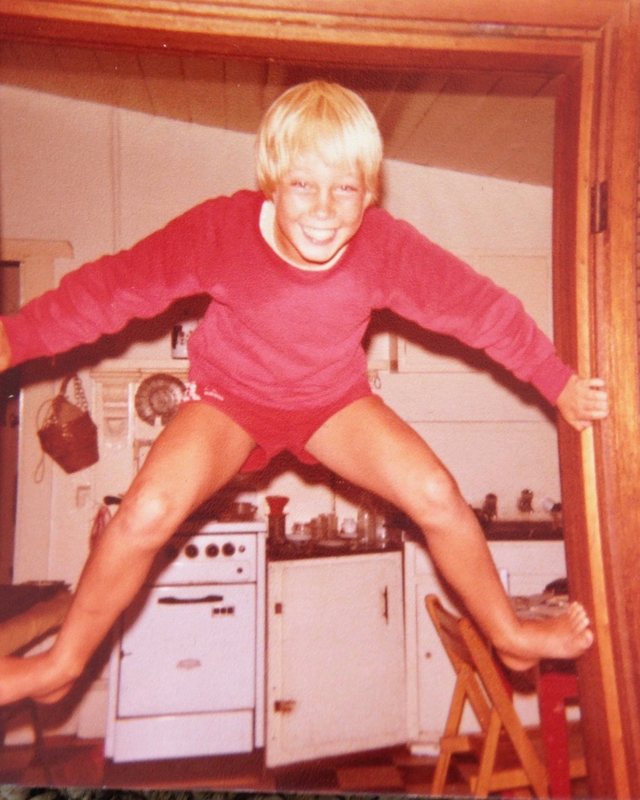
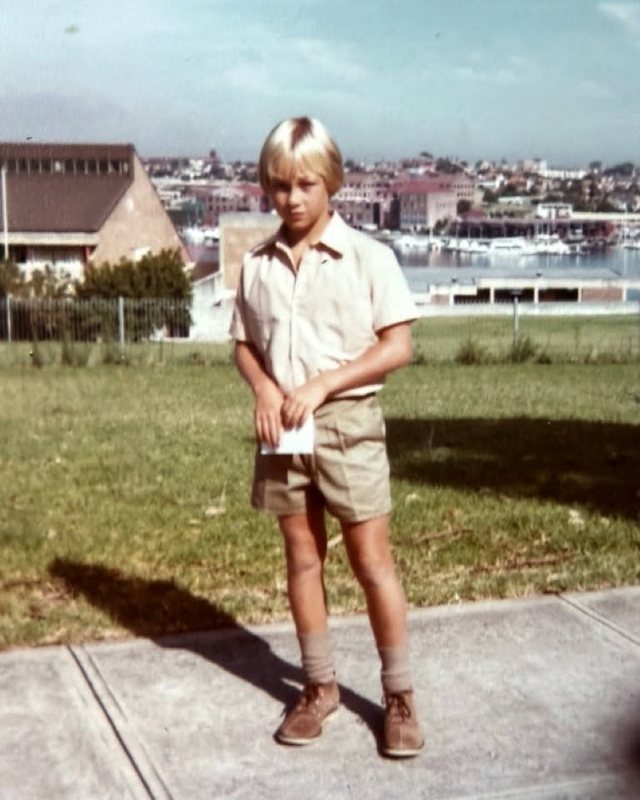
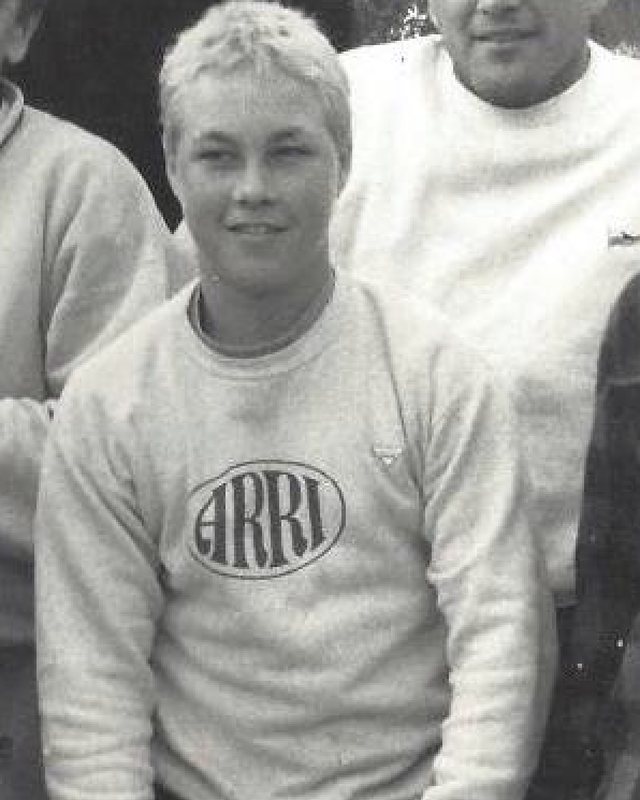
At fifteen he started work as a film and television lighting technician. He has spent decades on film sets since, on films such as The Adventures of Priscilla, Queen of the Desert, Babe, the Matrix trilogy, Star Wars and Mission: Impossible 2. His credit on Priscilla reads “Naughty Best Boy”. Balmain had something to do with that.
In his twenties he sailed the Atlantic, was mugged at gunpoint in the Virgin Islands and ran a London nightclub that was later firebombed.
Noosa has been home base since 2006, and he still travels for film and television work. He has two sons.
After years writing screenplays that needed millions to tell, he turned to novels. Waterfront Rose is his first. It and Tiger’s Tale are set in the old-school Balmain he grew up in.
Questions
A few things people ask
- Why Balmain?
- The characters who surrounded us as kids were ripe for stories, and so was the place. Balmain was a country town in the middle of a city, and something was happening around us every minute of the day. It was rough and tough, and sometimes a hard place to grow up. I could talk about it for hours.
- What’s in the DNA of the books?
- My own years on the streets of Balmain, first: what I saw as a paperboy, running around Birchy Oval, the neighbours, the families, the pubs, the workers. Being an only child with a big imagination helped. Then movies, which I loved more than anything as a kid. I saw The Godfather at the Bijou in Balmain. Later Animal Kingdom, Succession, The Gentlemen. But mostly it’s Balmain, lived and breathed.
- Are the people real?
- They’re real to me. I taught myself to write screenplays, and I spend a long time on character bios: what toothpaste they use, who their grandmother was. By the time I’m writing, they feel real. But no, they’re not. They’re a mix of people I’ve known or met, stories I’ve heard, and a lot of invention. Not real enough for any crime boss to come looking for us.
- Which book comes first?
- Waterfront Rose, and it’s tracking well. Tiger’s Tale has been with me for nearly ten years, and a lot of it is already written, so it follows.
- When can I read it?
- I’m aiming to finish Waterfront Rose by January. If I publish it myself, it’s out early in 2027. A publisher takes longer.
- Publisher or self-published?
- Still up in the air. I’d like to go the traditional route, for the writing prizes and the publicity that comes with them. But there are pros and cons both ways.
- Will it be a film or a series?
- Both books started life as screenplay ideas for film and TV, so they’re written that way. Would I love to see them on screen? Absolutely. Any producers reading: read the book, and let’s talk.
- How can I read some now?
- The Prologue is on the Waterfront Rose page. Sign up to the mailing list and Chapter 7 lands in your inbox, and the first hundred people to sign up get an early reader copy of the whole book. I’m genuinely grateful to anyone who wants to read what I’ve made.
The list
News on Waterfront Rose and Tiger’s Tale, and an early reader copy for the first to sign up.
Form not showing? Sign up here.